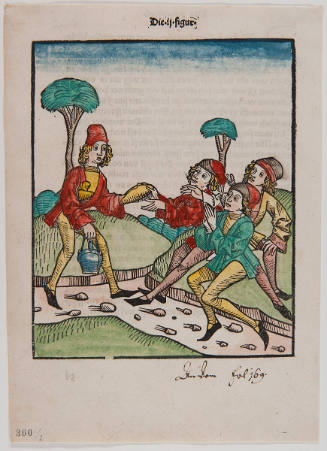
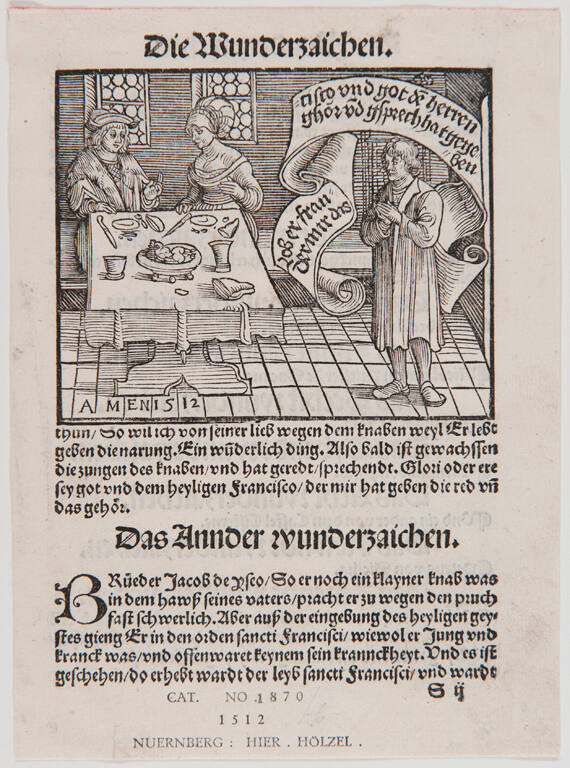
Leaf from Die Legend des heyligen Vatters Francisci (Legenda maior) by Bonaventure of Bagnaregio (1260-63): Chapter 8, “Those Freed from Various Illnesses”; Imprint: Printed in Nuremberg by Hieronymus Höltzel for the heirs of Caspar Rosentaler, April 7, 1512
Printer
Hieronymous Höltzel
German, active 1502–circa 1525
Author
Bonaventure of Bagnoregio (Giovanni di Fidanza)
Italian, circa 1217–1274
Artist
Wolf Traut
German, 1486–1520
DateApril 7, 1512
MediumInk on paper, woodcut
Dimensions7 x 5 in. (17.8 x 12.7 cm)
ClassificationsBook Arts
Credit LinePurchased with funds from the State of North Carolina
Object number62.1.1/8
On View
Not on viewto 1274, was Saint Francis of Assisi’s (1181/82–1226) second biographer. His Legenda maior was the only life of Saint Francis authorized for use in Franciscan convents andchurches from 1266 onward. The biography helped shape the visual tradition that developed around the influential founder of the Franciscan order. The woodcut in this leaf illustrates the miraculous healing of a young man through the saint’s intervention.
[L. Humphrey, “The People’s Collection, Reimagined,” 2023]
This leaf is from the first German edition of a life of Saint Francis of Assisi (1181–
1226) written by the theologian who led the Franciscan order from 1257 to 1274.
The woodcut depicts a miraculous healing through Saint Francis’s intervention. The
setting is a dining room in Città della Pieve (in present-day Italy), where a young couple
is fostering a boy born without speech or hearing. According to the text, the husband
prayed for Saint Francis to restore the boy’s speech and hearing, and the
miracle was granted. The two slender windows behind the dinner
table are filled with Venetian-style circular glass roundels (rulli or rui) such as those
produced by sixteenth-century Venetian glassmakers for export to Istanbul.
[L. Humphrey, “Venice and the Ottoman Empire” 2024]
ProvenanceFred Werther, Baltimore, Maryland, no. 1870; [Ferdinand Roten Galleries, Inc., 123 W. Mulberry St, Baltimore, Maryland]; NCMA purchase on February 13, 1962.
Published References"Catalogue of Early Book Art," North Carolina Museum of Art Calendar of Art Events (May 1962), cat. no. 28.
"Acquisitions," North Carolina Museum of Art Bulletin 4, nos. 2 and 3 (Winter-Spring 1964), listed 65.
Exhibition HistoryRaleigh, NC, North Carolina Museum of Art, “Early Book Art,” May 1962, then traveling, cat. no. 28.
Raleigh, NC, North Carolina Museum of Art, "The People's Collection, Reimagined," April 24, 2023–January 16, 2024.
Raleigh, NC, North Carolina Museum of Art, "Venice and the Ottoman Empire," September 28, 2024-January 5, 2025. Object Rights Statement
The North Carolina Museum of Art (NCMA) makes images of its collection available online to support research and scholarship and to inform and educate the public. Certain works of art, as well as the photographs of those works of art, may be protected by copyright, trademark, or related interests not owned by the NCMA. The responsibility for ascertaining whether any such rights exist and for obtaining all other necessary permissions remains with the applicant. To request images and/or permissions from the NCMA, please complete our online request form.


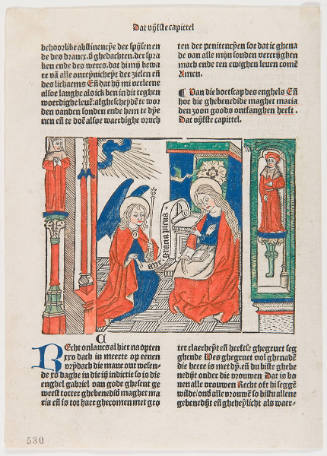
![Leaf from a book of hours: from the Hours of the Passion according to John (John 19:28–32) [foliated ‘20’]](/internal/media/dispatcher/17601/thumbnail)
Master of Étienne Poncher
circa 1490–1500
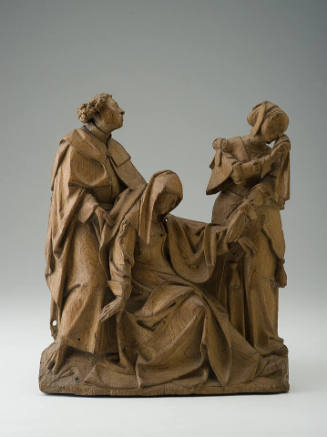
South Netherlandish artist
circa 1520–1530
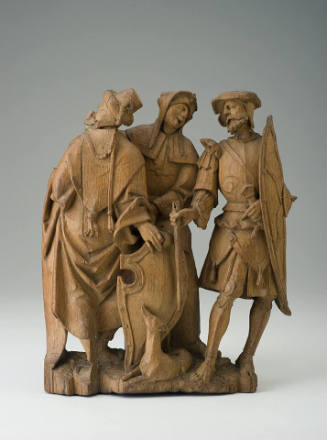
South Netherlandish artist
circa 1520–1525