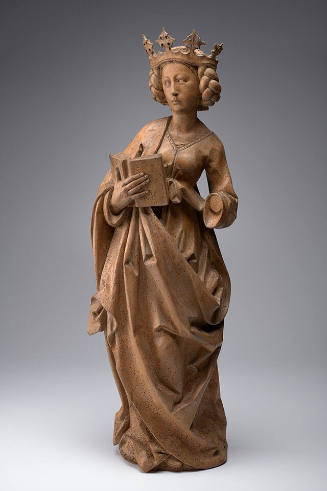
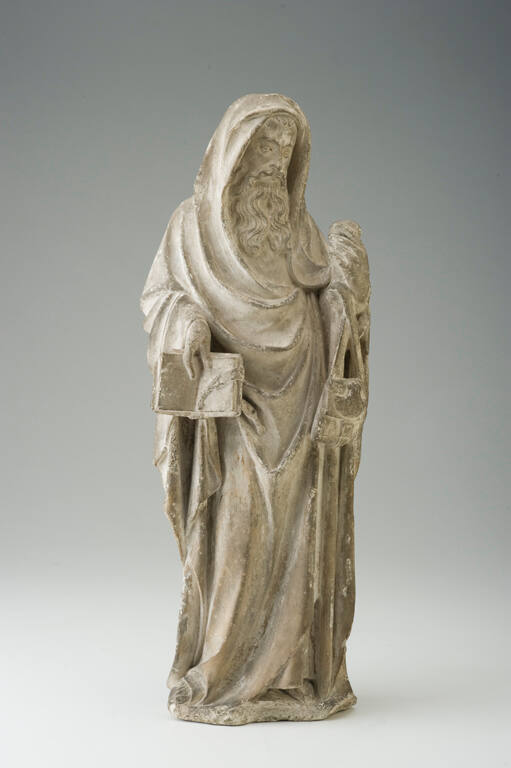
Saint James the Greater
Datecirca 1400
MediumLimestone with traces of polychromy
Dimensionsheight, width, and depth: 26 × 9 1/2 × 6 in. (66 × 24.1 × 15.2 cm)
ClassificationsSculpture
Credit LinePurchased with funds from the State of North Carolina
Object number61.1.2
On View
On view[L. Humphrey, "The People's Collection, Reimagined," 2026]
ProvenanceGeorge Gray Barnard Cloister Collection; Metropolitan Museum of ArtPublished ReferencesThe Art Quarterly (Winter 1961), 395, illus. 398.
La Chronique des Arts, Supplement a la Gazette des Beaux-Arts, no. 117 (February 1962), 22.
"Acquisitions," North Carolina Museum of Art Bulletin 4, nos. 2 and 3 (Winter-Spring 1964), briefly discussed 9, listed 64, illus. (b-w) 40.
Exhibition HistoryRaleigh, NC, North Carolina Museum of Art, "The People's Collection Reimagined," March 31, 2026-present. Object Rights Statement
The North Carolina Museum of Art (NCMA) makes images of its collection available online to support research and scholarship and to inform and educate the public. Certain works of art, as well as the photographs of those works of art, may be protected by copyright, trademark, or related interests not owned by the NCMA. The responsibility for ascertaining whether any such rights exist and for obtaining all other necessary permissions remains with the applicant. To request images and/or permissions from the NCMA, please complete our online request form.
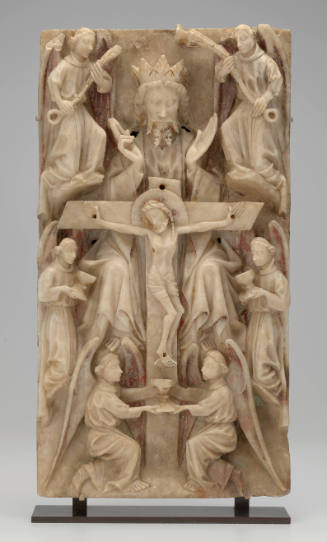
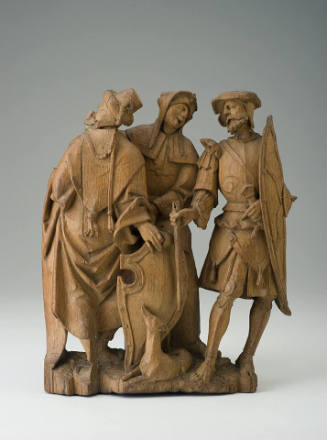
South Netherlandish artist
circa 1520–1530
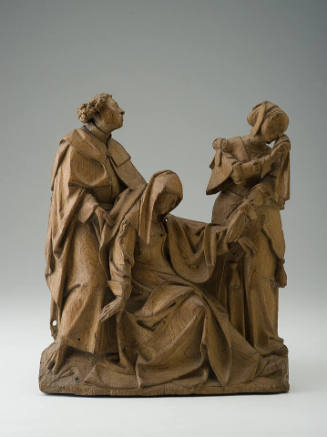
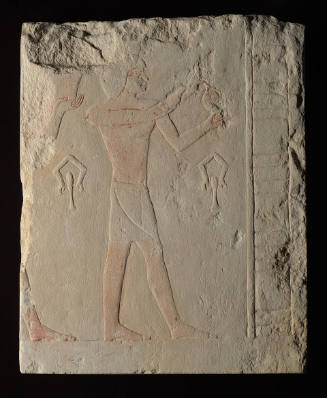
South Netherlandish artist
circa 1520–1525
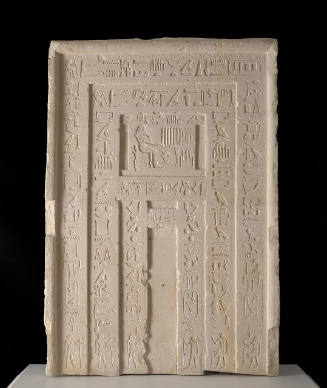
![Predella panel from the high altarpiece of the Abbazia di Monteveglio: Six Mourning Apostles [James the Greater, Bartholomew, Matthew, John the Evangelist, James the Lesser, and Andrew]](/internal/media/dispatcher/14657/thumbnail)