
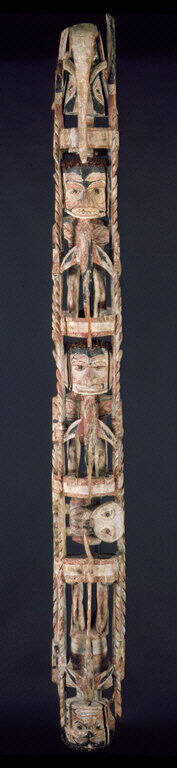
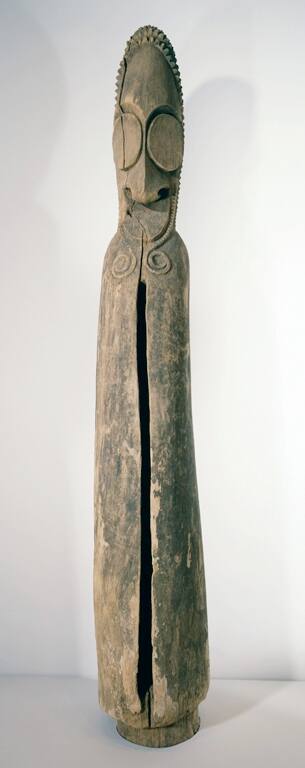
Grade Society Figure with Lizard
Artist
Unknown
Datecirca 1920–1940
MediumFernwood
DimensionsH. 127 5/8 in. (324.2 cm)
ClassificationsSculpture
Credit LineGift of Mr. Jeremy Merrin
Object number84.7
On View
Not on viewMen in Vanuatu (formerly the New Hebrides) advanced in their society through a series of "grades," which were measured by age and the accumulation of wealth. At each stage, a man was required to host a feast for members of his new and old grades and to commission the ritual paraphernalia used during the ceremonies. Among these ritual objects were fernwood figures, which were thought to provide abodes for ancestral spirits. The face of this ghostlike figure was originally painted; traces of paint remain around the eyes. The relief carving of a lizard may have represented the guardian spirit of the individual for whom the carving was made.ProvenanceReportedly collected by George W. Staempfli (1910–1999), New York, 1966; with Staempfli Gallery, New York; sold to Edward Merrin, Inc., New York, 1983; to Jeremy Merrin (son of Edward Merrin), New York; given to NCMA, 1984.
Object Rights Statement
The North Carolina Museum of Art (NCMA) makes images of its collection available online to support research and scholarship and to inform and educate the public. Certain works of art, as well as the photographs of those works of art, may be protected by copyright, trademark, or related interests not owned by the NCMA. The responsibility for ascertaining whether any such rights exist and for obtaining all other necessary permissions remains with the applicant. To request images and/or permissions from the NCMA, please complete our online request form.

Unknown
Unknown
Unknown