
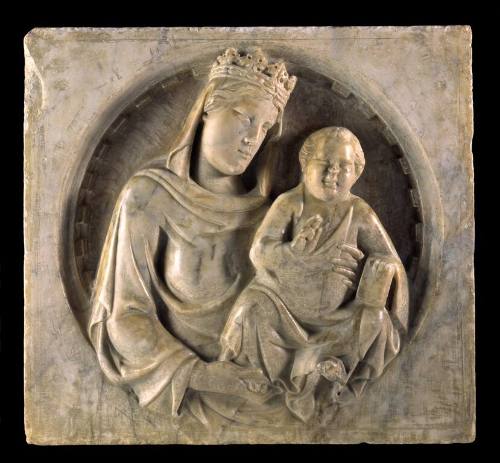
Relief from a Monument to St. Octavian, Volterra Cathedral: Virgin and Child
Artist
Tino di Camaino
Italian, b. circa 1280, Siena; d. 1337, Naples
Date1318–1320
MediumMarble
Dimensions18 x 19 1/2 x 4 in. (45.7 x 49.5 x 10.2 cm)
ClassificationsSculpture
Credit LineGift of the Samuel H. Kress Foundation
Object numberGL.60.17.4
On View
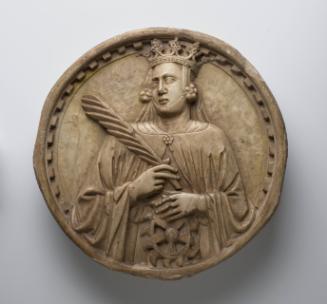
On viewThe earlier of the two reliefs adorned the monument to Saint Octavian in the Volterra Cathedral. The other ornamented the front of the tomb of Bartolomeo di Capua—one of the most famous jurists of the Middle Ages. His tomb once stood near the high altar of Naples Cathedral but was dismantled in the nineteenth century.
[L. Humphrey, "The People's Collection, Reimagined," 2022]ProvenanceCreated for the tomb (arca) of Saint Octavian in the Cathedral of Volterra, ca. 1318–20. Niccolini Collection, Florence [1]. [Alessandro Contini Bonacossi, Rome-Florence (1878-1955)]; Samuel H. Kress, New York, NY, June 1, 1936, inv. K1022; given to the National Gallery of Art, Washington, DC, June 29, 1939; deaccessioned by the National Gallery of Art, December 5, 1957; given to the NCMA, December 9, 1961.
[1] This could possibly be Giovanni Niccolini, Tuscan Ambassador to Rome from 1587 to 1610, or Niccolini’s son Filippo (1586-1666), an advisor to the Medici. Both Niccolini and Filippo were art patrons. Filippo bought and decorated a villa at Camugliano and Montauto castle, Tuscany (acquired in 1572 upon the bankruptcy of the Montauto family). For more information on Filippo and his patronage, see Elisa Goudriaan, Florentine Patricians and Their Networks: Structures Behind the Cultural Success and the Political Representation of the Medici Court (1600–1660) (Leiden and Boston: Brill, 2018), 151–164.Published ReferencesGiuseppe Contugi Serguidi, Delle Fabbriche Chiese Pitture e Iscrizioni esistenti nella città di Volterra, 1812–1819, ms. 10283, Biblioteca Guarnacci Volterra, Volterra, It, 127.
Guida per la città di Volterra (Volterra: Pietro Torrini, 1832): 103.
Gaetono Leoncini, Illustrazione sulla Cattedrale di Volterra (Siena: Luigi Lazzeri, 1869), 38–39, 261–62, 367–68.
Adolfo Venturi, Storia dell’arte Italiana, vol. 4 (Milan: Ulrico Hoepli, 1906), 393–99 at 397.
L. Consortini, “Osservazioni critiche sui santi Giusto e Clemente e Ottaviano,” Rassegna Volterrana 2 (1925): 90.
W. R. Valentiner, Catalogue of an Exhibition of Italian Gothic and Early Renaissance Sculptures (exhibition catalogue) (Detroit: The Detroit Institute of Arts, 1938), cat. no. 10, illus.
Carlo Lud. Ragghianti, “La mostra di scultura italiana antica a Detroit (U.S.A.),” Critica d’arte 3 (1938): 170–183 at 171, tav. 123, fig. 7.
National Gallery of Art: Preliminary Catalogue of Paintings and Sculpture (Washington, DC: National Gallery of Art, 1941), 236, cat. no. A-39.
Alfred M. Frankfurter, “Great Sculpture of the Renaissance,” Art News 40, no. 9 (July 1941): 9–13 at 11–12 (suggests similarities between high relief in Roman sarcophagi and Camaino’s forms).
Georg Swarzenski, “Some Aspects of Italian Quattrocento Sculpture in the National Gallery,” Gazette des Beaux-Arts (Nov. 1943): 283–304 at 286, inv. K1022.
Alfred M. Frankfurter, “The Kress Collection in the National Gallery,” Art News 43, no. 16 (December 1, 1944): 25–84, illus. 25, 50–51, no. 2.
May Davis Hill, "Madonna and Child Relief by Tino da Camaino," North Carolina Museum of Art Bulletin 2, no. 1 (Summer 1958): discussed 14, illus. (b-w) 13, fig. 2.
Masterpieces of Art: in Memory of William R. Valentiner (exhibition catalogue) (Raleigh: North Carolina Museum of Art, 1959), 20, cat. no. 3, illus. 36.
Fern Rusk Shapley with W. R. Valentiner, The Samuel H. Kress Collection (Raleigh: North Carolina Museum of Art, 1960), 24, illus. (b-w) 25.
Annarosa Garzelli, Sculture toscane nel Dugento e nel Trecento (Florence: Marchi & Bertolli, 1969), 19–69, 147–150, illus. 321.
Franco A. Lessi, “La Cattedrale di Volterra: Arte e Storia,” in Rassegna Volterrana, vol. 40/41 (1974): 56.
Ulrich Middledorf, Sculptures from the Samuel H. Kress Collection: European Schools XIV–XIX Century (London: Phaidon Press, 1976), 6–7, pl. 2 (suggests that the Shrine of Octavian was commissioned upon the donation of funds left in the will of Guglielemo di Ranieri di Belforte).
Enzo Carli, Volterra: nel Medioevo e nel Rinascimento (Pisa: Pacini Editore, 1978), 41–45, fig. 44.
Francesco Negri Arnoldi, “Scultura trecentesca in Calabria: Apporti esterni e attività locale,” Bollettino d'Arte 68, no. 21 (1983): 1–49 at 2.
Gert Kreytenberg, “Frammento dell’Arca di San Bartolo,” in Capolavori e Restauri (exhibition catalogue) (Florence: Cantini, 1986), 94–95 at 94.
Gert Kreytenberg, Tino di Camaino (Florence: Museo Nazionale del Bargello, 1986), 33–34, illus. 33, 94.
Gert Kreytenberg, Die Werke von Tino da Camaino, band 11 of Liebieghaus-Monographie (Frankfurt am Main: Liebieghaus-Skulpturensammlung, 1987), 40–41.
Roberto Bartalini, in Umbri e toscani tra Due e Trecento, ed. Luciano Bellesi (exhibition catalogue) (Torino: Umberto Allemandi, 1988), 80.
Francesco Aceto, “Per l’attività di Tino di Camaino a Napoli: le tombe di Giovanni di Capua e Orsolo Minutolo,” Prospettiva I, no. 53/56 (April 1988–January 1989), 134–142 at 139–140.
Gert Kreytenberg, “Tino di Camaino e Simone Martini,” in Simone Martini, ed. Luciano Bellosi (Florence: Centro Di, 1988), 203–209 at 208.
Gert Kreytenberg, “Zum gotischen Grabmal des heiligen Bartolus von Tino di Camaino in der Augustinerkirche von San Gimignano,” Pantheon (1988): 13–24.
Gert Kreytenberg, “Drei gotische Grabmonumente von Heiligen in Volterra,” Mitteilungen des Kunsthistorischen Institutes in Florenz 34 (1990): 69–100 at 69–71.
Gert Kreytenberg, “Tino di Camaino,” in The Dictionary of Art, ed. Jane Turner, vol. 31 (New York: Grove; London: Macmillan Ltd., 1996), 2–5 at 4.
Gert Kreytenberg, “Tre contributi all’opera di Tino di Camaino,” in Dialoghi di Storia dell’Arte 4/5 (1997): 132–143 at 133.
Introduction to the Collections, 2nd rev. ed. (Raleigh: North Carolina Museum of Art, 1992, illus. (b-w) 155.
David Steel, “Madonna and Child,” in North Carolina Museum of Art: Handbook of the Collections, ed. Rebecca Martin Nagy (Raleigh: North Carolina Museum of Art, 1998), 119 (cautious in defining the original placement of Camaino’s tondo).
Andrea Augenti and Massimiliano Munzi, Scrivere la città: Le epigrafi tardoantiche e medievali di Volterra (Secoli IV–XIV) (Florence: All’insegna del giglio, 1997), 78–82.
Roberta J. M. Olson, The Florentine Tondo (Oxford: Oxford University Press, 2000), 131, illus. (b-w) 132.
Francesco Aceto, “Tino di Camaino,” in Enciclopedia dell’arte medievale, vol. 11 (Rome: Istituto della Enciclopedia Italiana, 2000), 185.
F. A. Lessi, “La Chiesa di Santa Maria Assunta in Cielo Cattedrale di Volterra, La Scultura,” in Chiese di Volterra, vol. 1 (Florence: Nardini, 2000), 69.
Tiziana Barbavara di Gravellona, “Tino di Camaino a Firenze e il monumento funerario del vescovo Antonio d’Orso in Duomo. I. Per una nuova lettura del sepolcro,” Annali della Scuola Normale Superiore di Pisa. Classe di Lettere e Filosofia, serie 4, vol. 6, no. 2 (2001), 265–299 at 265–266n1.
Max Seidel, “The sculpted image: Tino di Camaino measures up to Simone Martini,” in Italian Art of the Middle Ages and the Renaissance, vol. 2 (Venice: Marsilio, 2005), 627–638 at 629, 632, fig. 7.
Francesca Baldelli, Tino da Camaino (Morbio Inferiore, CH: Selective Art Edizioni, 2007), 241–248, 408, no. 22.
Umberto Bavoni, “Dopo il libro “Volterra d’oro e di pietra” a cura di Maria Giulia Burresi e Antonio Caleca: Catalogo della mostra in occasione del Primo Centenario della Pinacoteca Civica di Volterra, Palazzo dei Priori, 20 luglio–1 novembre 2006,” in Rassegna Volterrana 94 (2007): 93.
A. Puglia, “Dedicazioni e culto dei santi a Volterra nell’età precomunale e comunale tra istituzioni ecclesiastiche e civili,” in Profili istituzionali della santità medievale: culti importanti, culti esportati e culti autoctoni, ed. Gabriella Rossetti (Pisa: GISEM and ETS, 2008), 178.
David Steel, “Madonna and Child,” in North Carolina Museum of Art: Handbook of the Collections, rev. ed. (Raleigh: North Carolina Museum of Art, 2010), 248, illus. (color) 249.
Claudia Bardelloni, “L’attività Toscana di Tino di Camaino,” in Scultura gotica senese 1260–1350, ed. Roberto Bartalini, et. al (Siena : Fondazione Monte dei Paschi, 2011), 119–182 at 122–124, 142–143, cat. nos. 27–28.
Kai Hohenfeld, Die Madonnenskulpturen des Giovanni Pisano (Weimar: Verlag und Datenbank für Geisteswissenschaften, 2014), 20–21, 225, 329.
Stefano Martinelli, “Quattro formelle con busti di santi e una con iscrizione,” in Il Museo Diocesano d’Arte Sacra di Volterra, ed. Umberto Bavoni, Annamaria Ducci, Andrea Muzzi (Pisa: Pacini, 2018), 142–145, no. 29.
Stefano Martinelli, “Frammenti del monumento di Sant’Ottaviano,” in Il Museo Diocesano d’Arte Sacra di Volterra, ed. Umberto Bavoni, Annamaria Ducci, Andrea Muzzi (Pisa: Pacini, 2018), 150–153, no. 32.
Lyle Humphrey, “Saul Among the Prophets: W. R. Valentiner, Robert Lee Humber, Carl Hamilton, and the Italian Art Collection at the NCMA,” in Collecting Early Modern Art in the US South (1400–1800), ed. Lisandra Estevez (London: Cambridge Scholars Publishing, 2021), 40.
Kress Collection Digital Archive, National Gallery of Art, accessed 8/3/26, https://kress.nga.gov/Detail/objects/3122.
Exhibition HistoryDetroit, MI, Detroit Institute of Arts, "Exhibition of Italian Gothic and Early Renaissance Sculptures," January 7–February 20, 1938, cat. no. 10.
Raleigh, NC, North Carolina Museum of Art, "Masterpieces of Art: In Memory of William R. Valentiner, 1880–1958," April 6–May 17, 1959, cat. no. 3.
Chapel Hill, NC, Ackland Art Center, "Medieval Art," April 28–May 20, 1961, cat. no. 8. Object Rights Statement
The North Carolina Museum of Art (NCMA) makes images of its collection available online to support research and scholarship and to inform and educate the public. Certain works of art, as well as the photographs of those works of art, may be protected by copyright, trademark, or related interests not owned by the NCMA. The responsibility for ascertaining whether any such rights exist and for obtaining all other necessary permissions remains with the applicant. To request images and/or permissions from the NCMA, please complete our online request form.

Tino di Camaino
1328–1329


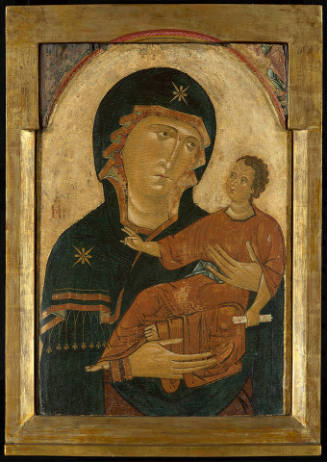
Berlinghiero di Melanese
circa 1225–1250
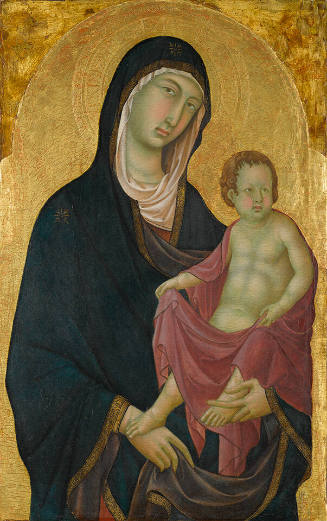
Unknown Roman artist
circa 20 BCE–20 CE
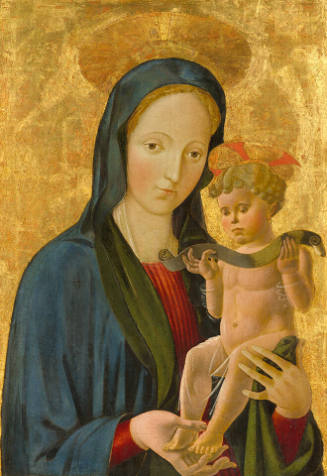
Mariotto di Nardo
circa 1400–1410