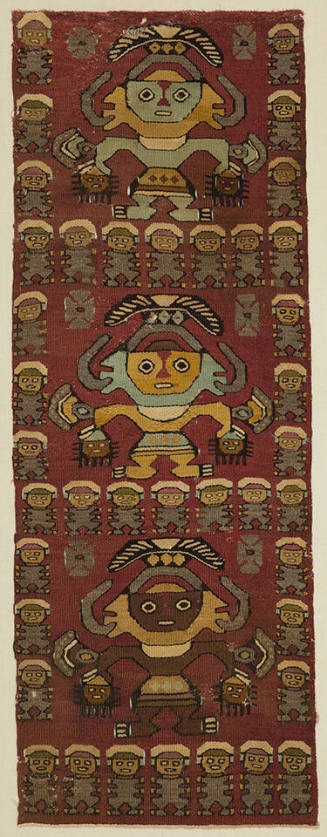
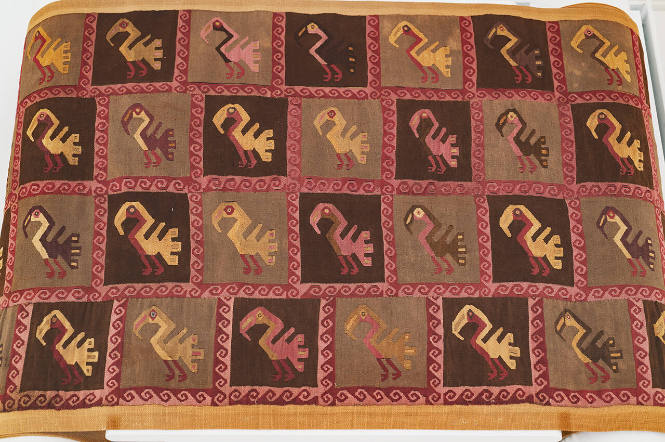
Loincloth
Artist
Unknown
Datecirca 700–1000
MediumCamelid fiber and cotton
Dimensions21 1/8 x 121 in. (53.7 x 307.3 cm)
ClassificationsTextiles
Credit LineGift of Mr. and Mrs. Gordon Hanes
Object number86.26
On View
On viewDuring the Late Intermediate period in Peru, it was common to join together many strips of weaving to produce a larger textile. These skillfully woven tapestry bands are embellished with images of scorpions; complex geometric designs decorate the two ends. Finely woven textiles were important to the economies of pre-Columbian Peruvian cultures. Weaving was the traditional responsibility of women, and the importance of woven cloth to the cultures' wealth underscores the central part played by women in creating and maintaining a healthy economy. Object Rights Statement
The North Carolina Museum of Art (NCMA) makes images of its collection available online to support research and scholarship and to inform and educate the public. Certain works of art, as well as the photographs of those works of art, may be protected by copyright, trademark, or related interests not owned by the NCMA. The responsibility for ascertaining whether any such rights exist and for obtaining all other necessary permissions remains with the applicant. To request images and/or permissions from the NCMA, please complete our online request form.