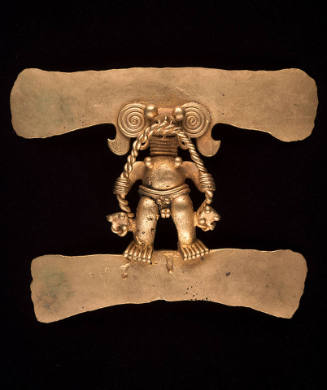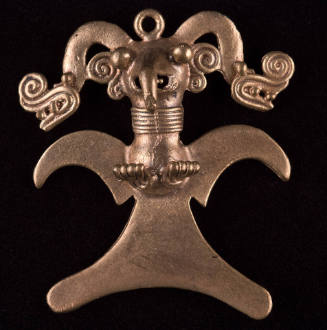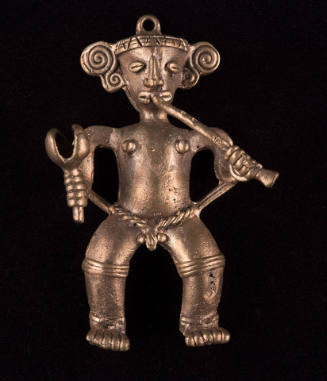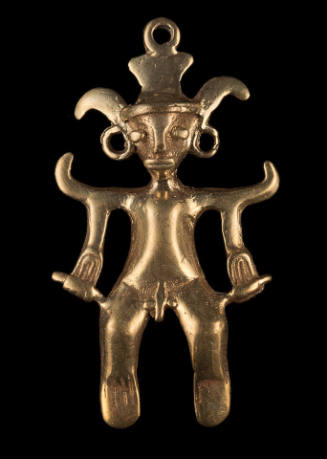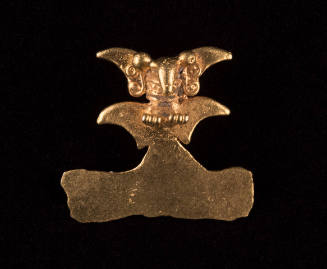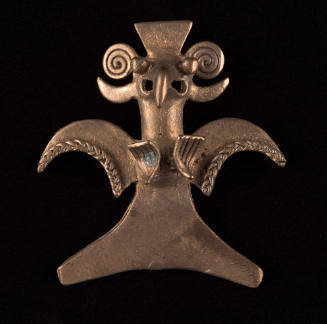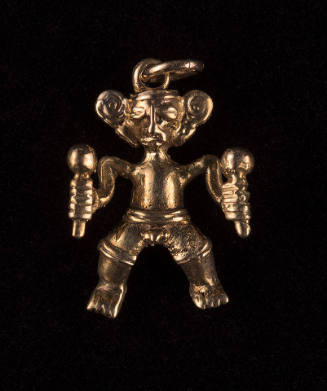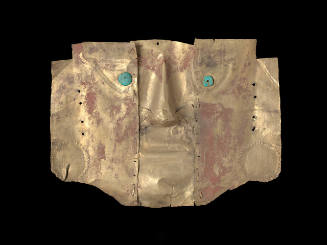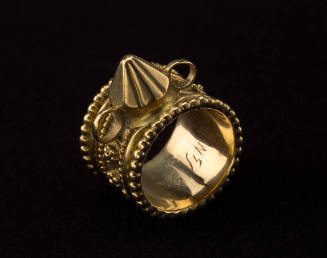
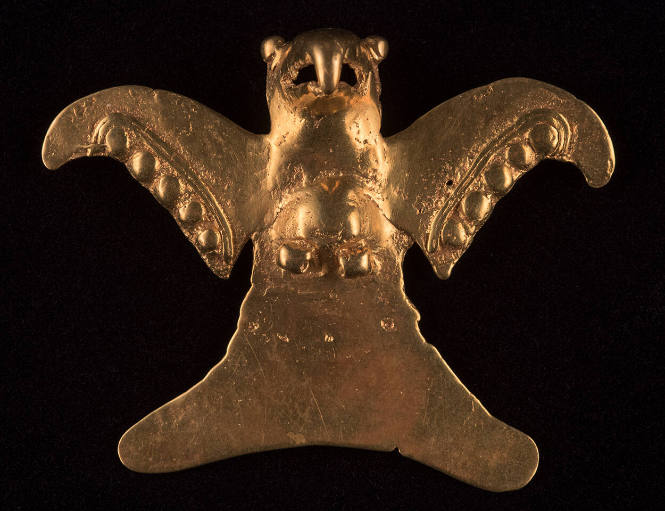
Eagle Pendant
Artist
Unknown
Datecirca 800–1500
MediumCast and hammered gold
Dimensions2 x 2 1/2 in. (5.1 x 6.3 cm)
ClassificationsSculpture
Credit LineGift of Dr. Mark Sheppard
Object numberG.68.6.1
On View
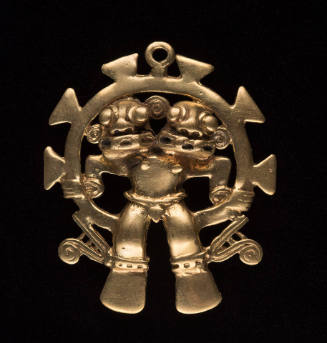
On viewThis pendant probably was suspended from a cord and worn around the neck as an emblem of power and prestige. It represents an eagle with outspread wings and open claws, ready to seize prey. Bird-form pendants are found throughout southern Costa Rica and northern Panama and are perhaps the most typical metal artifacts of the region. Christopher Columbus was the first European to name these objects "eagle pendants" when he saw them being worn by the peoples of the eastern coastal region during his voyage along Caribbean Central America in the early 1500s.Published References"Acquisitions," North Carolina Museum of Art Bulletin 9, nos. 1 and 2 (December 1969), listed 56.
Exhibition HistoryRaleigh, NC, North Carolina Museum of Art, Reopening of the Mary Duke Biddle Gallery, November 14-December 19, 1969.
Raleigh, NC, North Carolina Museum of Art, "The People's Collection, Reimagined," October 7, 2022–present. Object Rights Statement
The North Carolina Museum of Art (NCMA) makes images of its collection available online to support research and scholarship and to inform and educate the public. Certain works of art, as well as the photographs of those works of art, may be protected by copyright, trademark, or related interests not owned by the NCMA. The responsibility for ascertaining whether any such rights exist and for obtaining all other necessary permissions remains with the applicant. To request images and/or permissions from the NCMA, please complete our online request form.