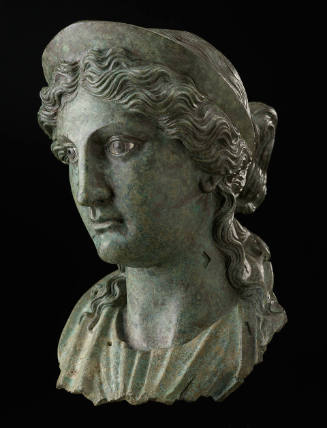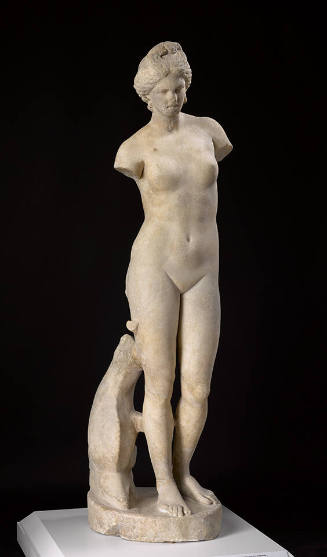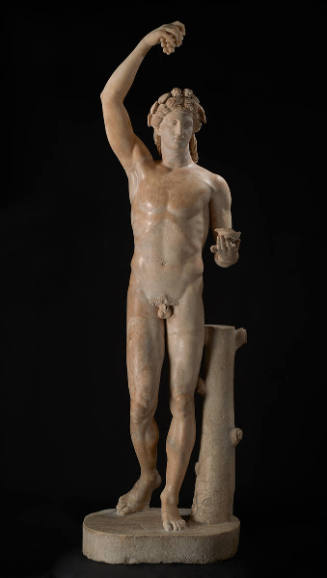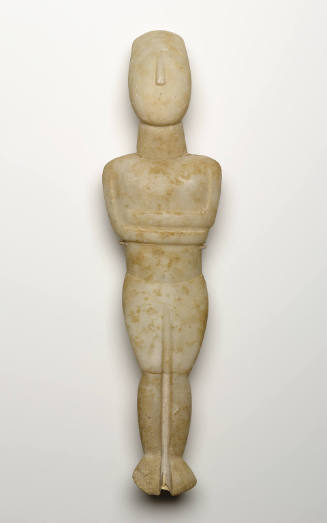
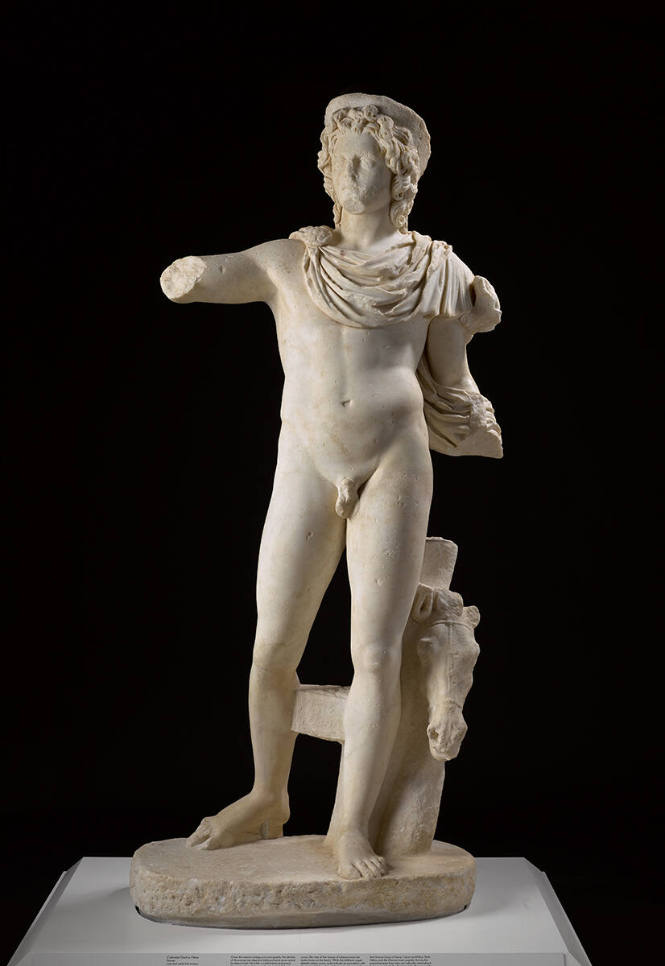
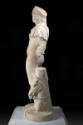
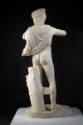
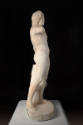
Statue of a Celestial God or Hero
Artist
Unknown Roman artist
Datelate 2nd–mid 3rd century
MediumMarble
Dimensions80 x 37 x 22 in. (203.2 x 94 x 55.9 cm)
ClassificationsSculpture
Credit LinePurchased with funds from the North Carolina State Art Society (Robert F. Phifer Bequest)
Object number84.1
On View
On view[1] Per McAlpine, letter to P. J. Kirby, December 1, 1983, NCMA object file 84.1. This collection has yet to be identified.Published References"Recent Acquisitions," North Carolina Museum of Art Preview (Summer 1984), discussed and illus. (b-w) 10.
Cornelius Vermeule, Alexander the Great Conquers Rome (Cambridge, MA: Sir Northwald Nuffler Foundation, 1986), 7, 45, 51, illus. fig. 1.
Cornelius C. Vermeule, III, Greek Imperial Art/Numismatic Art of the Greek Imperial World (Cambridge: The CopyQuik Corp., private printing, 1986), illus. 14.
Cornelius Vermeule, The Cult Images of Imperial Rome (Giorgio Bretschneider Editore, 1987), 65, illus. fig. 43A-B.
Meg Gunkel, "Arts Sampler: Cultural Resources for North Carolina," NCArts 3 (1986), 11.
Cornelius C. Vermeule, III, Greek Imperial Art, Vol. 5, part 2 (Cambridge, MA: CopyQuik Corp., private printing, 1986), 14, illus.
Cornelius C. Vermeule, "The Rise of the Severan Dynasty in the East: Young Caracalla, about the Year 205, as Helios-Sol," North Carolina Museum of Art Bulletin 14, no. 4 (1990), 30-48, illus. (b-w) 29, 38, (b-w details) 38, 39, 43, 44.
Introduction to the Collections, rev. ed. (Raleigh: North Carolina Museum of Art, 1992), illus. (b-w) 34.
"Med in Latin: Department of Classical Studies" (The University of North Carolina at Greensboro, 1994-94), illus. front of flyer.
“Recent Acquisitions,” NCMA Preview, Summer 1994, illus. 10.
Steven E. Hijmans, "Castor, Caracalla and the so-called Statue of Sol in the North Carolina Museum of Art," Babesch Bulletin: Annual Papers on Classical Archaeology, no. 69 (Leiden, 1994), 165-174, illus. 166-167, 172.
Mary Ellen Soles, entry for Emperor Caracalla in the Guise of Helios, in North Carolina Museum of Art: Handbook of the Collections, Rebecca Martin Nagy, ed. (Raleigh: North Carolina Museum of Art, 1998), 39, illus. (color).
Moltessen,“The Esquiline Group: Aphrodisian Statues in the Ny Carlsberg Glyptotek,” Antike Plastik no.27 (2000), 19n33.
Petra Matern, Helios und Sol: Kulte und Ikonographie des griechischenrömischen Sonnengottes, (Istanbul: Ege Yayinlari, 2002), 112–16, 181, 238–39, cat. I 43.
Massimiliano Papini, Una statua di Sol a Palazzo Barberini,” Mitteilungen des Deutschen Archäologischen Instituts: Römische Abteilung vol. 93 (2002), 108.
Stephen Hijmans, Sol: The Sun in the Art and Religions of Rome, PhD. diss., University of Groningen, 2009, 108, 115, 118, 511–13, 535n110, 544n141, plate 4.1-3, 75.1.
Mary Ellen Soles, entry for Emperor Caracalla in the Guise of Helios, in North Carolina Museum of Art: Handbook of the Collections, rev. ed. (Raleigh: North Carolina Museum of Art, 2010), 80, illus. (color) 81.
Achim Lichtenberger, Severus Pius Augustus: Studien zur sakralen Repräsentation und Rezeption der Herrschaft des Septimius Severus und seiner Familie (193–211 n. Chr.), (Leiden: Brill, 2011), 245–46, illus. 201.
Steven Hijmans, Sol: Image and Meaning of the Sun in Roman Art and Religion, Vols. 1–2, (Leiden: Brill, 2024), 1:211, 1:785–86, cat. A1b.2, 2:867–74, figs. 6.2–6.5, plate 24.4.Exhibition HistoryRaleigh, NC, North Carolina Museum of Art, "The People's Collection, Reimagined," October 7, 2022–present. Object Rights Statement
The North Carolina Museum of Art (NCMA) makes images of its collection available online to support research and scholarship and to inform and educate the public. Certain works of art, as well as the photographs of those works of art, may be protected by copyright, trademark, or related interests not owned by the NCMA. The responsibility for ascertaining whether any such rights exist and for obtaining all other necessary permissions remains with the applicant. To request images and/or permissions from the NCMA, please complete our online request form.
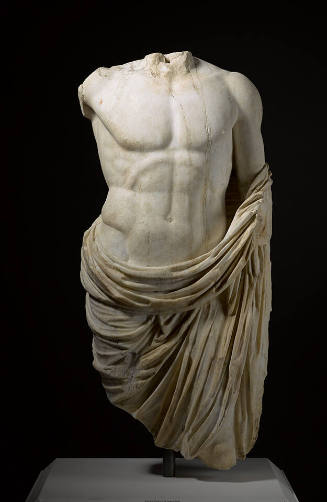
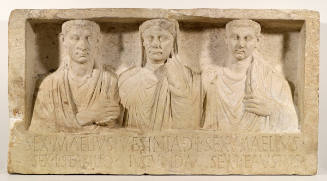
Unknown Roman artist
circa 20 BCE–20 CE