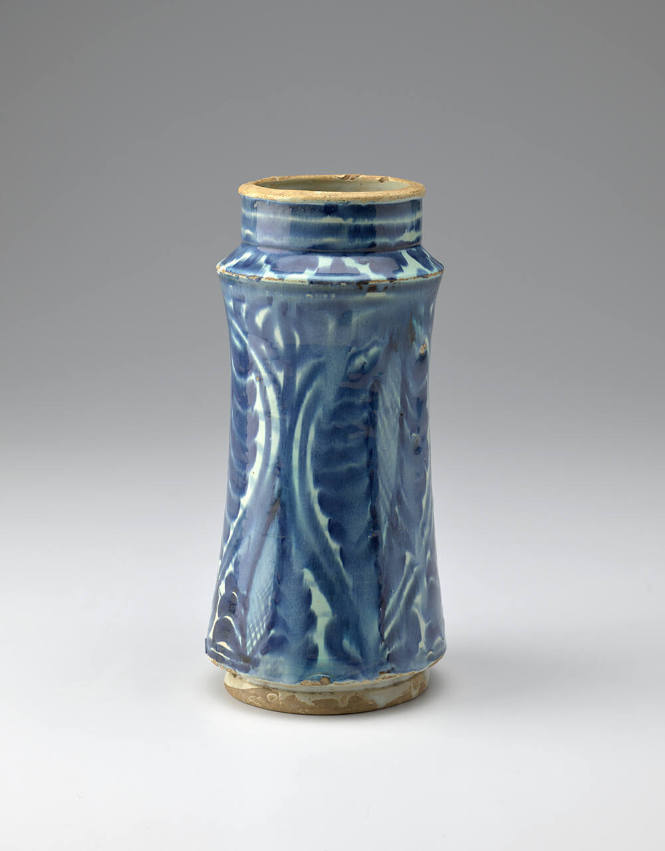
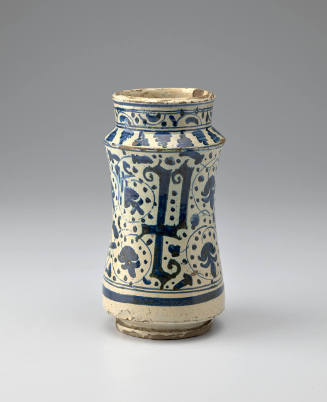
Pharmacy jar (albarello) with hanging palmettes
Artist
Unknown
Datecirca 1450–1500
MediumTin-glazed earthenware painted with cobalt blue
Dimensionsheight and width: 11 1/8 × 5 5/16 in. (28.2 × 13.5 cm)
ClassificationsCeramics
Credit LinePurchased with funds from the Charles E. and Pauline Lewis Hayworth Endowed Fund
Object number2021.21.3
On View
On viewIberian potters introduced the technique of tin glazing to Europe from the Middle East in the tenth century. By the fifteenth century, they dominated the European market for albarelli, vessels designed to hold powdered substances (medicines, herbs, pigments) sold in pharmacies. Taking inspiration from earlier Iranian and Syrian examples, potters in Valencia (and later Catalonia) developed their own distinctive designs for the glazes, often fusing Spanish Gothic motifs with Islamic ones.
[L. Humphrey, "The People's Collection, Reimagined," 2022]ProvenanceCreated in Catalonia, probably Barcelona. Purchased by a private collector at a market stall in Paris and used as a lamp, before 2009; [Galerie Alain et Gerard, 5 Rue de Beaune, Paris, 7ème, 2009]; [Pierre-Richard Royer, Paris, 2009]; [Sam Fogg, January 21, 2013, inv. 15994].Published ReferencesLustreware from Spain: A Collection of Hispano-Moresque Ceramics (auction and exhibition catalog) (London: Sam Fogg, Ltd, 2021), cat. no. 11 (illus. color), p. 54-57.Exhibition HistoryRaleigh, NC, North Carolina Museum of Art, "Becoming the NCMA: 10 Decades of Collecting, 1924-2022," June 11-August 21, 2022.
Raleigh, NC, North Carolina Museum of Art, "The People's Collection, Reimagined," October 7, 2022–present. Object Rights Statement
The North Carolina Museum of Art (NCMA) makes images of its collection available online to support research and scholarship and to inform and educate the public. Certain works of art, as well as the photographs of those works of art, may be protected by copyright, trademark, or related interests not owned by the NCMA. The responsibility for ascertaining whether any such rights exist and for obtaining all other necessary permissions remains with the applicant. To request images and/or permissions from the NCMA, please complete our online request form.
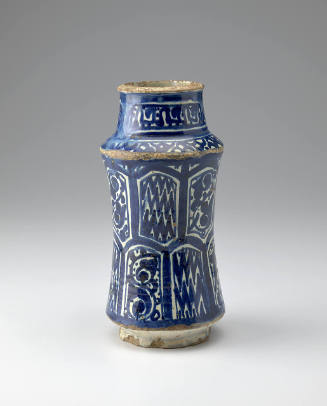
Unknown
circa 1425–1450