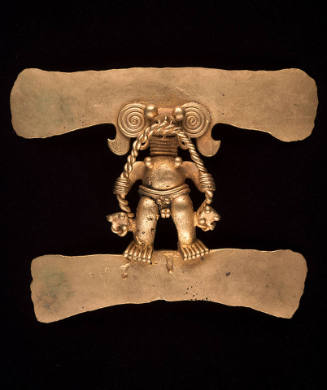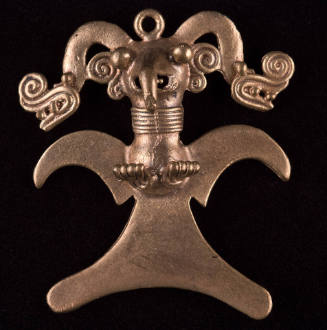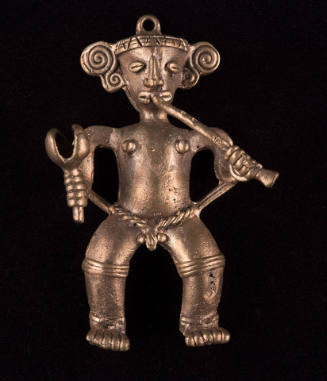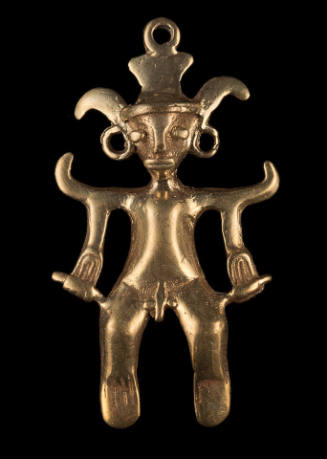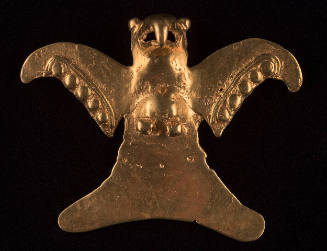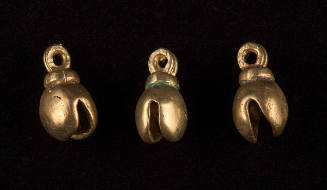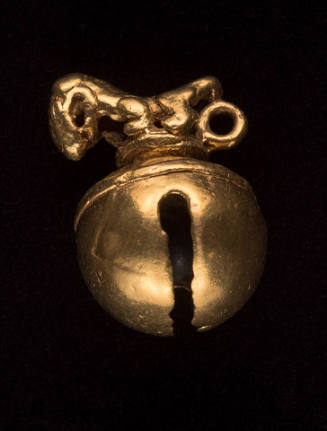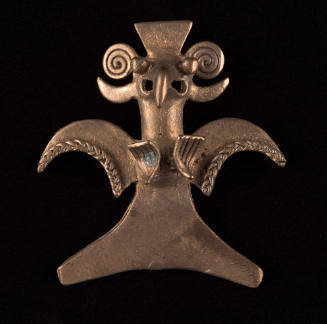
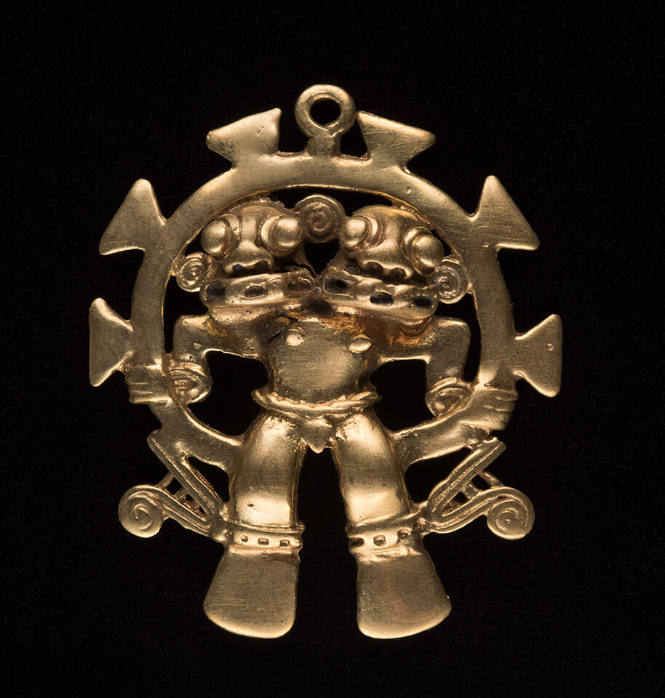
Figural Pendant
Artist
Unknown
Datecirca 750–1550
MediumCast gold
Dimensions1 5/8 x 1 7/8 in. (4.1 x 4.8 cm)
ClassificationsMetal
Credit LineGift of Dr. Clifton F. Mountain and Mrs. Marilyn T. Mountain
Object number96.4.89
On View
On viewThis figure may represent a shaman, a religious practitioner with magical powers. An aura-like arc that may represent the shaman's power surrounds the double-headed figure.
Gold pendants created by the lost-wax method of metal casting are common in the southern Costa Rican region of Diquís. They generally resemble gold pendants found in the Chiriquí region of northern Panama, where the lost-wax casting method was used in earlier times. It is possible that this technique, along with other cultural features, was introduced into the Diquís region from neighboring Panama.
Exhibition HistoryRaleigh, NC, North Carolina Museum of Art, "The People's Collection Reimagined" (Thematic Gallery: "Devotion and the Arts in the People's Collection"), June 7, 2025-present. Object Rights Statement
The North Carolina Museum of Art (NCMA) makes images of its collection available online to support research and scholarship and to inform and educate the public. Certain works of art, as well as the photographs of those works of art, may be protected by copyright, trademark, or related interests not owned by the NCMA. The responsibility for ascertaining whether any such rights exist and for obtaining all other necessary permissions remains with the applicant. To request images and/or permissions from the NCMA, please complete our online request form.