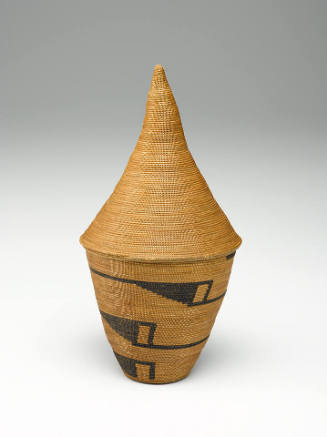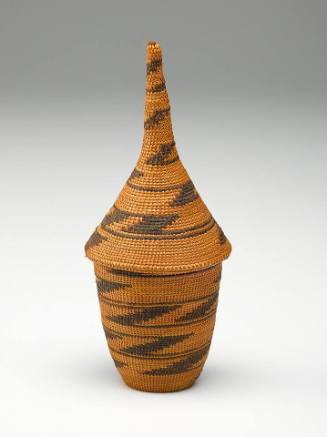
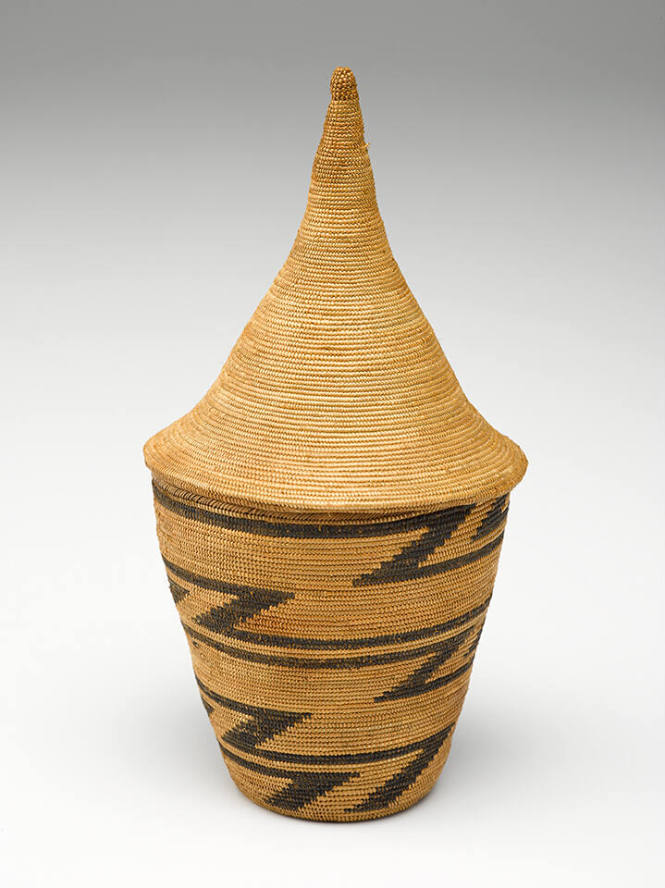
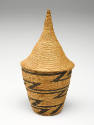
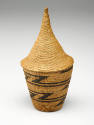
Basket (agaseke)
Artist
Tutsi artist
DateMid–late 20th century
MediumWoven plant fibers and dye
DimensionsHeight (body): 3 15/16 in. (10 cm)
Height (lid): 4 1/8 in. (10.5 cm)
Height (both elements together): 8 in. (20.3 cm)
Diameter (body): 3 3/4 in. (9.5 cm)
Diameter (lid): 4 in. (10.2 cm)
Height (lid): 4 1/8 in. (10.5 cm)
Height (both elements together): 8 in. (20.3 cm)
Diameter (body): 3 3/4 in. (9.5 cm)
Diameter (lid): 4 in. (10.2 cm)
ClassificationsNatural Substances
Credit LineGift of Julianna Simmons
Object number2017.20.30/a-b
On View
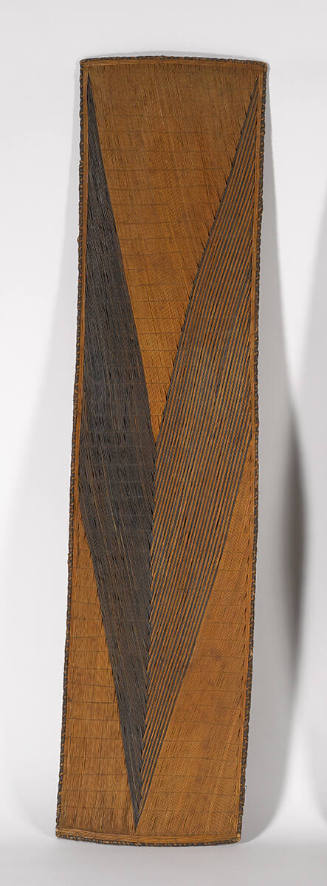
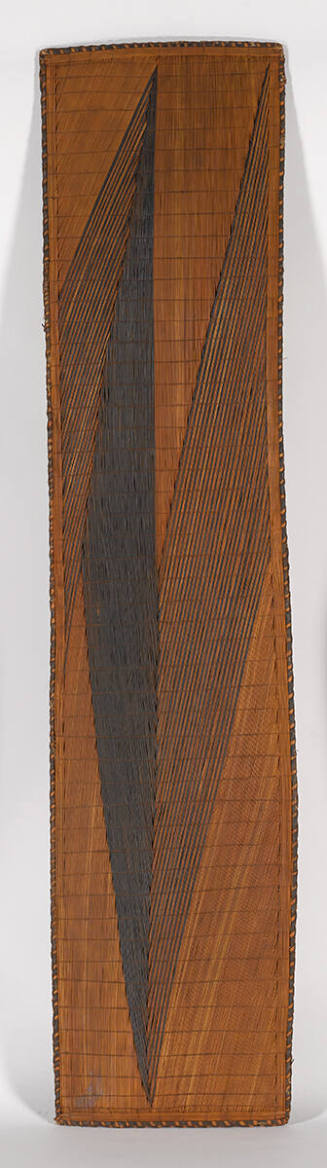
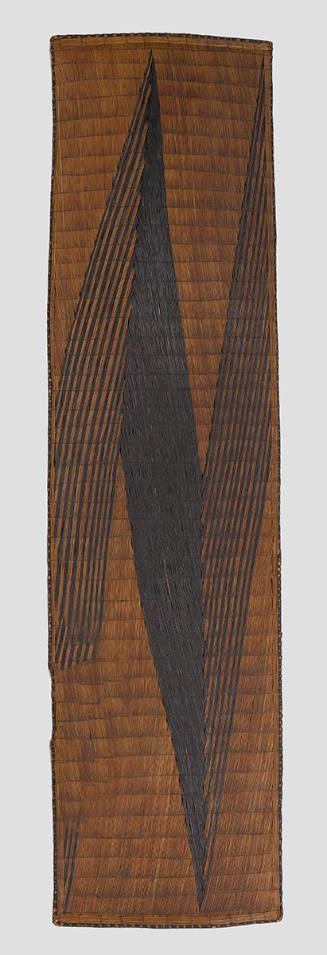
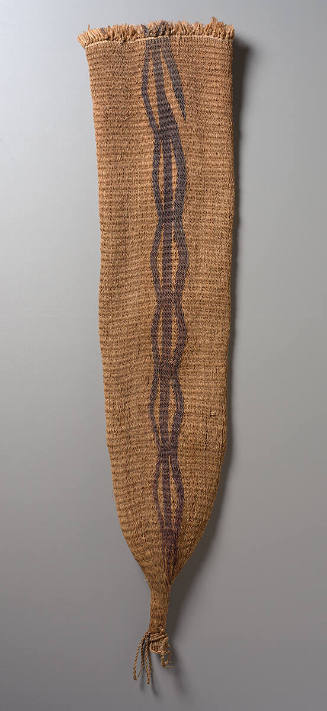
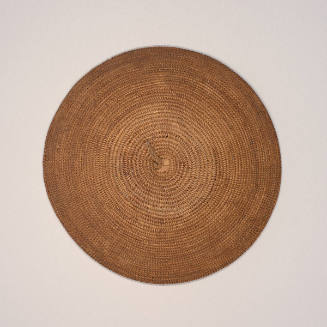
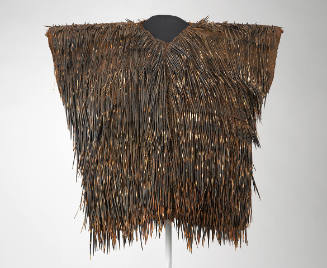
Not on viewTutsi fiber works typically feature a dyed geometric pattern backed by the golden hue of regional grasses and fibers. Black pigments are made using banana flower sap or charcoal, and red using ochre or redwood bark. Other colors, such as purple, blue, and green, indicate the use of commercial dyes. The meaning behind each color and design may vary with each artist, but their creation enables the cultural, financial, and creative empowerment of the women who make them.
A symbol of familial peace and unity, agaseke are most commonly used to hold gifts or foodstuffs during Rwandan rites of passage and marriage ceremonies. These baskets are constructed using an intricate coiling technique known as uruhindu, which requires great skill and an attention to detail. Agaseke may range in size and shape but are most distinguishable by their tall, conical lids and geometric patterning.ProvenanceWilliam B. Simmons, New York, NY; given to daughter Julianna Simmons, New York, NY, n.d.; given to NCMA, 2017.
Object Rights Statement
The North Carolina Museum of Art (NCMA) makes images of its collection available online to support research and scholarship and to inform and educate the public. Certain works of art, as well as the photographs of those works of art, may be protected by copyright, trademark, or related interests not owned by the NCMA. The responsibility for ascertaining whether any such rights exist and for obtaining all other necessary permissions remains with the applicant. To request images and/or permissions from the NCMA, please complete our online request form.