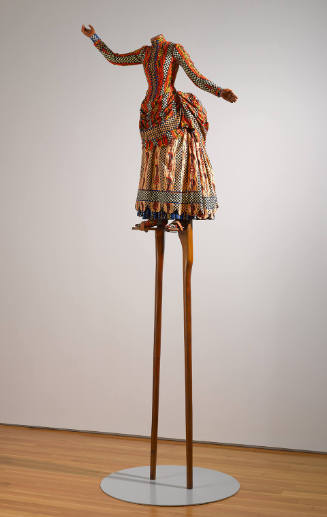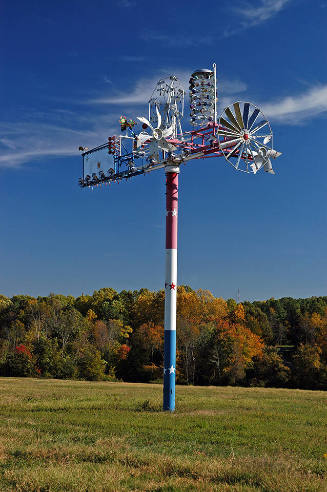
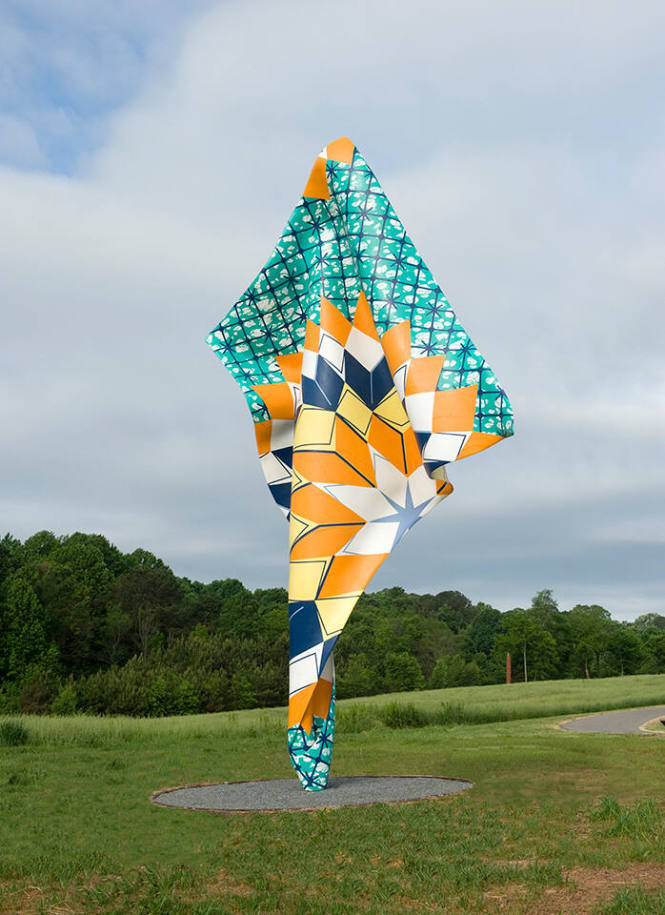
Wind Sculpture II
and that’s a factor of globalization ultimately. I suppose I’m a direct product of that. The fabrics I use also look like they could be just African … but the fabric has a complicated history in its trade routes: it was originally designed as an Indonesian fabric, produced by the Dutch, and the British sold it into the African market. It’s a perfect metaphor for multilayered identities.
[L. Dougherty, 2024]ProvenanceCreated London, 2013; collection of the artist; [James Cohan Gallery, New York]; sold to NCMA, 2014. [1]
[1] Sold to NCMA with funds provided by Jim and Ann Goodnight.
Published ReferencesYinka Shonibare MBE: FABRIC-ATION (exhibition catalogue) (West Bretton: Yorkshire Sculpture Park, 2013), illus (color) 27, 29, front cover.
Linda Dougherty, “New and on View at the NCMA / Yinka Shonibare, MBE, Wind Sculpture II, 2013,” in North Carolina Museum of Art Preview (Summer 2014), discussed 16.
Laura Petrides Wall, with photos by Gus Samarco, “Through the Lens: In Plain Sight,” Walter (July/August 2018), illus. (color) 92 and front cover.
Gweneth Hastings Pound, "Four Fantastic NCMA Itineraries," North Carolina Museum of Art Preview (Summer 2024), 12 (color).Exhibition HistoryWest Bretton, UK, Yorkshire Sculpture Park, “Yinka Shonibare MBE: FABRIC-ATION,” March 2–September 1, 2013.
London, England, National Maritime Museum and the Queen’s House, “Yinka Shonibare MBE,” September 18, 2013–February 23, 2014.
Object Rights Statement
The North Carolina Museum of Art (NCMA) makes images of its collection available online to support research and scholarship and to inform and educate the public. Certain works of art, as well as the photographs of those works of art, may be protected by copyright, trademark, or related interests not owned by the NCMA. The responsibility for ascertaining whether any such rights exist and for obtaining all other necessary permissions remains with the applicant. To request images and/or permissions from the NCMA, please complete our online request form.