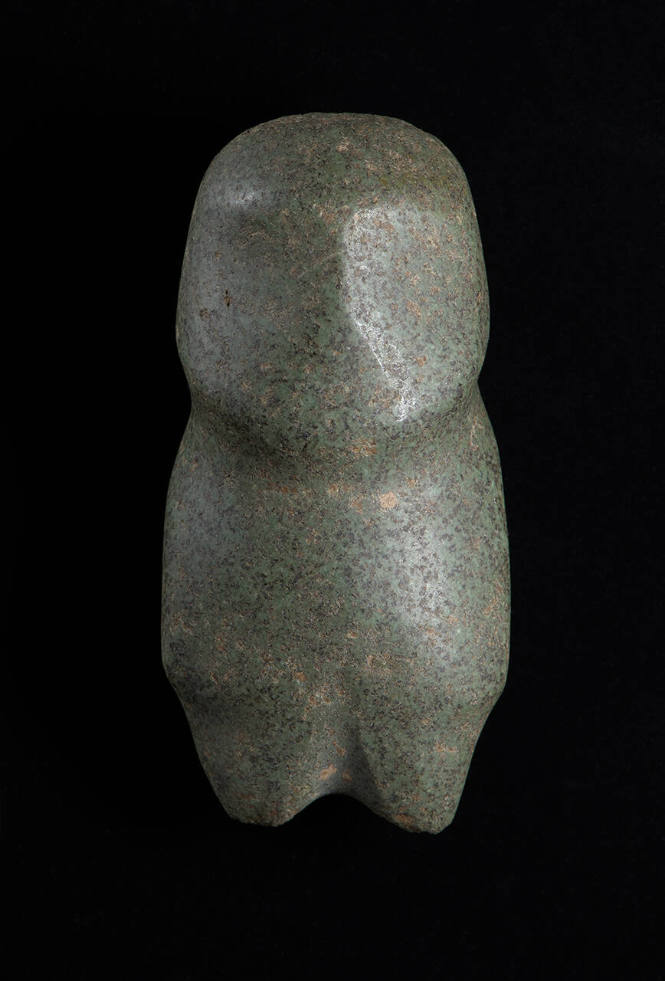
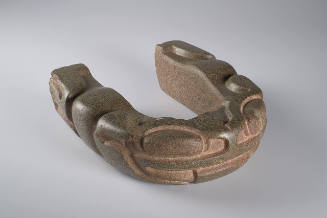
Celt Effigy
Artist
Unknown
Datecirca 500–200 BCE
MediumDiorite and related stone
Dimensionsheight, width, and depth: 4 1/2 x 2 1/4 x 1 5/8 in. (11.4 x 5.7 x 4.1 cm)
ClassificationsSculpture
Credit LineGift of Mr. and Mrs. Fred Olsen
Object numberGL.65.8.10
On View
On viewHighly abstract sculptures of standing human figures are unique to the Guerrero state of southwestern Mexico. This figure is based on the form of a celt, which was the primary chopping tool or ax for agricultural labor in pre-Columbian times. Celts were also symbolic of seeds, growth, and regeneration. Groupings of celts, buried as offerings or worn on the bodies of important individuals, symbolized the magical power of rebirth.Published References"Acquisitions," North Carolina Museum of Art Bulletin 7, nos. 2 and 3 (1967/68?), listed 67.
Exhibition HistoryRaleigh, NC, North Carolina Museum of Art, Reopening of the Mary Duke Biddle Gallery, November 14-December 19, 1969.
Raleigh, NC, North Carolina Museum of Art, "The People's Collection, Reimagined," October 7, 2022–present. Object Rights Statement
The North Carolina Museum of Art (NCMA) makes images of its collection available online to support research and scholarship and to inform and educate the public. Certain works of art, as well as the photographs of those works of art, may be protected by copyright, trademark, or related interests not owned by the NCMA. The responsibility for ascertaining whether any such rights exist and for obtaining all other necessary permissions remains with the applicant. To request images and/or permissions from the NCMA, please complete our online request form.




Unknown

