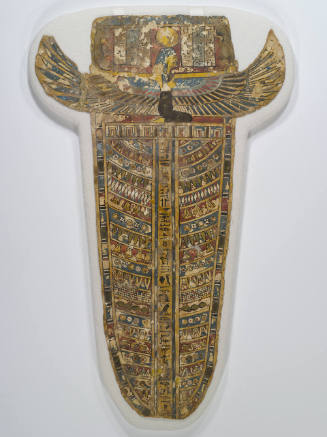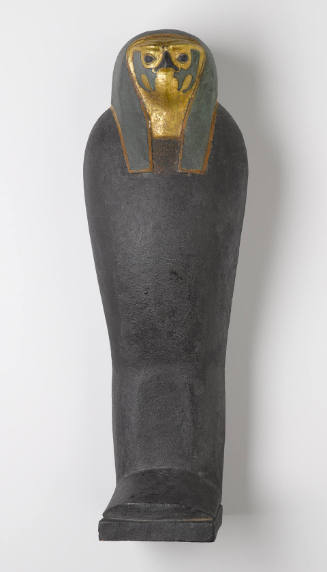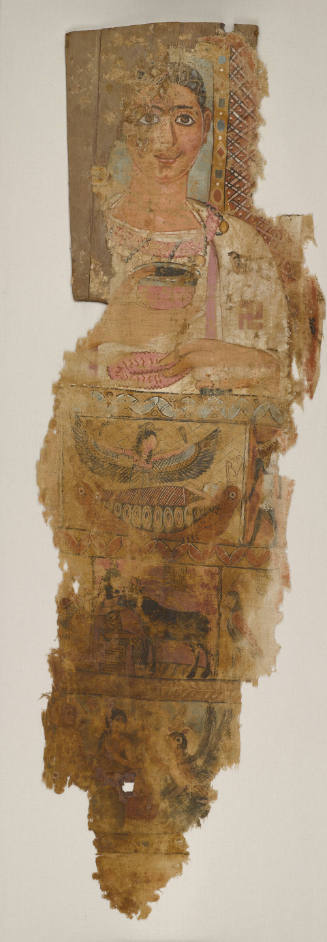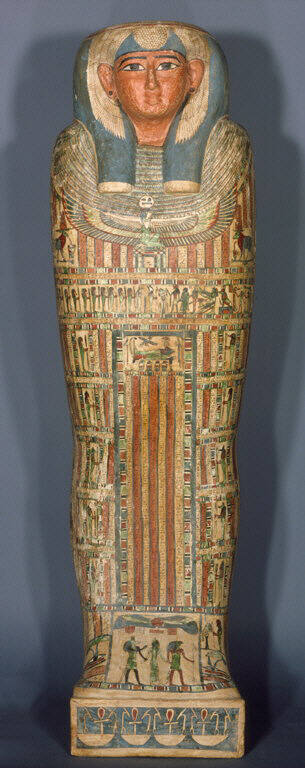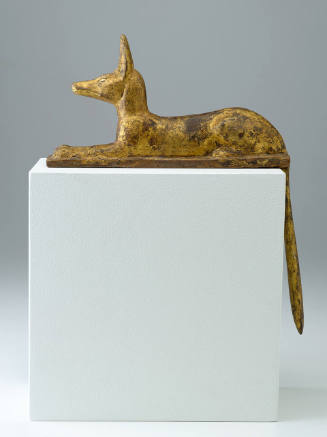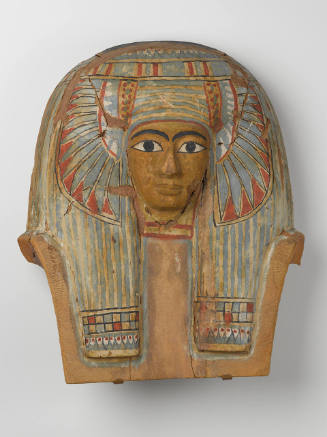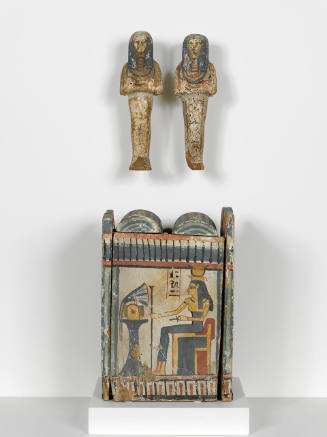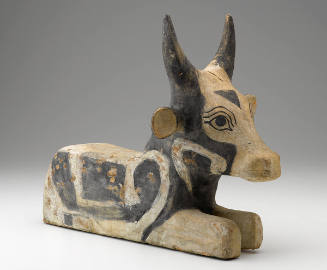


Gilded Mummy Covering
Artist
Unknown
Datecirca 300 BCE
MediumLinen with gesso, paint, and gilding
Dimensions60 x 14 3/8 x 12 1/4 in. (152.4 x 36.5 x 31.1 cm)
ClassificationsTextiles
Credit LinePurchased with funds from the State of North Carolina
Object number75.1.1/a-k
On View
On viewIn Pharaonic mythology, the gods were eternal and said to have bones of silver, skin of gold, and hair of lapis lazuli, a semiprecious blue stone. Covering a mummy with gilded cartonnage plaques and a mask with blue hair helped in the transformation of an individual into a luminous and eternal being.
[C. Rocheleau, "The People's Collection, Reimagined," 2022]ProvenanceCordier & Ekstrom, Inc., New York, NY; sold to NCMA, 1975. Published References"Recent Acquisitions," North Carolina Museum of Art Bulletin 13, nos. 1 and 2 (1975), cat. no. 97, illus. (b-w) 33.
Mary Ellen Soles, entry for Mummy Covering, in North Carolina Museum of Art: Handbook of the Collections, Rebecca Martin Nagy, ed. (Raleigh: North Carolina Museum of Art, 1998), 11, 20-21, illus. (color) 20.
Caroline M. Rocheleau, entry for Gilded Mummy Covering, in North Carolina Museum of Art: Handbook of the Collections, rev. ed. (Raleigh: North Carolina Museum of Art, 2010), 40, illus. (color) 41.
Caroline M. Rocheleau, Ancient Egyptian Art [Systematic Catalogue of the Collection] (Raleigh, NC: North Carolina Museum of Art, 2012), cat. no. 28, illus. (color) 79, detail (color) 80, details (color) and translations 145–146.
North Carolina Museum of Art, "The People's Collection," (Raleigh, NC; North Carolina Museum of Art, 2024), illus. (color) 10.Exhibition HistoryNew York, NY, Cordier and Ekstrom, "Him," January 4-February 10, 1973, cat. no. 1, illus.
Raleigh, NC, North Carolina Museum of Art, "Recent Acquisitions," November 23, 1975-February 22, 1976.
Raleigh, NC, North Carolina Museum of Art, "The People's Collection, Reimagined," October 7, 2022–present. Object Rights Statement
The North Carolina Museum of Art (NCMA) makes images of its collection available online to support research and scholarship and to inform and educate the public. Certain works of art, as well as the photographs of those works of art, may be protected by copyright, trademark, or related interests not owned by the NCMA. The responsibility for ascertaining whether any such rights exist and for obtaining all other necessary permissions remains with the applicant. To request images and/or permissions from the NCMA, please complete our online request form.